From Assessment to Intervention: Closing the Clinical Decision-Making Gap


Behavioral health has no shortage of assessments. We also have no shortage of interventions. The difficult part is often what happens between them. A client completes several measures. We conduct an intake. We establish a diagnosis. We have a collection of evidence-based interventions available.
Now:
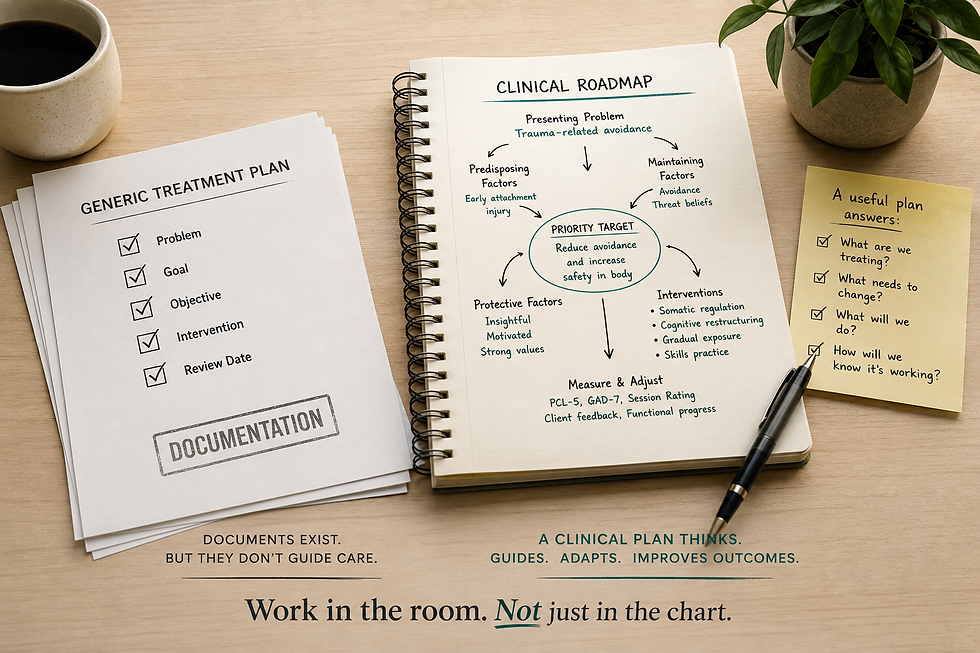
Which problem are we treating first, and why? That's the clinical decision-making gap.
Start With the Data
Assessment data gives us structured information about symptoms, severity, functioning, and potentially relevant clinical domains. The intake adds history, context, client priorities, functional impact, previous treatment response, strengths, and observation. Neither should exist independently. Together, they begin building the clinical picture.
Identify the Presenting Problems
Not every elevated score needs to become a treatment target. Not every complaint belongs at the top of the treatment plan. The clinician has to determine which problems are:
clinically significant,
functionally impairing,
maintaining other problems,
important to the client,
and realistically modifiable through treatment.
Prioritization is part of treatment.
Define the Targets
Once the problem is identified, ask:
What specifically needs to change for this problem to improve?
That's where broad concerns become workable clinical targets. “Trauma” becomes something more specific. Perhaps intrusive re-experiencing, avoidance, exaggerated threat response, maladaptive trauma-related beliefs, functional restriction created by those processes. Different targets can require different interventions.
Match Intervention to Target
The question should not be:
What modality do I use for this diagnosis?
A better question is:
What intervention is most appropriate for this target, given this client's presentation, readiness, context, and treatment history?
That preserves clinical judgment while giving the decision structure.
Reassess the Decision
Then we measure again. Not because measurement is inherently virtuous. Because we made a clinical decision and need information about whether it worked. Assessment and intervention shouldn't occupy opposite ends of treatment. They should remain connected throughout it.
Clinical decision-making is the bridge. Explore Clinical Training


Comments