You Gave the GAD-7. Now What?

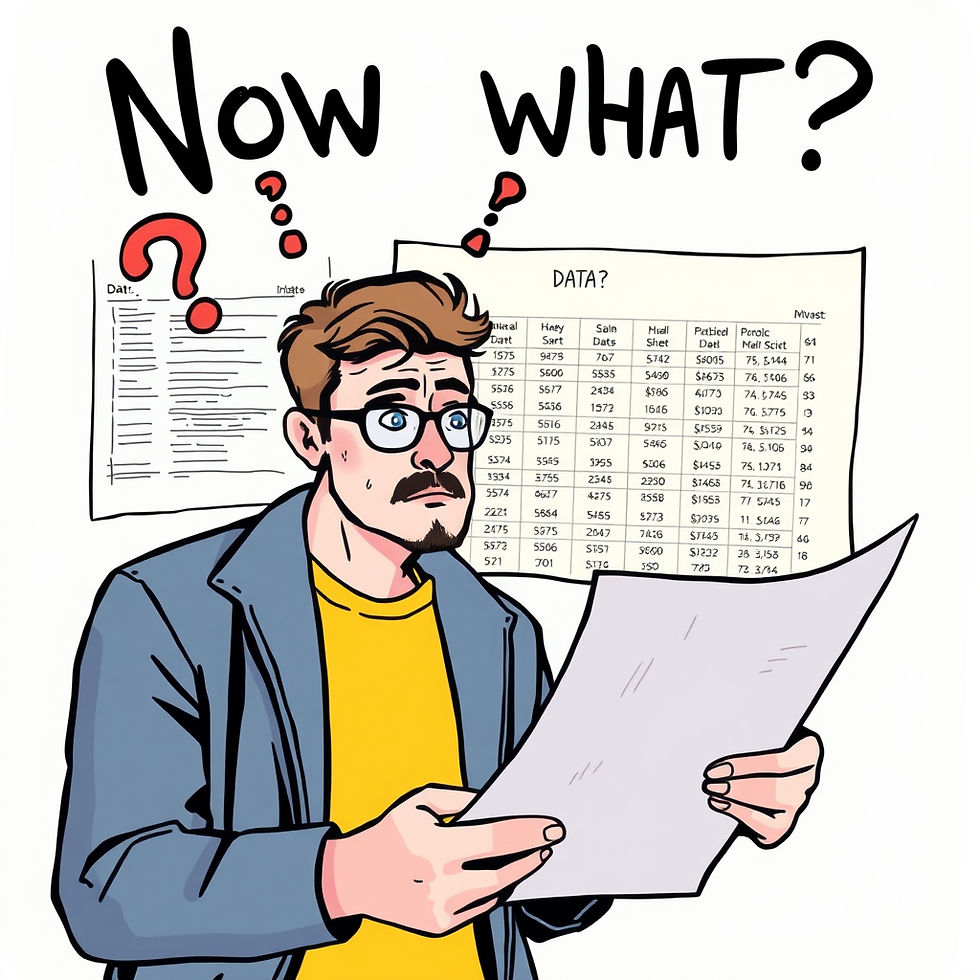
The client completes the GAD-7.
You calculate the score.
Moderate anxiety.
Now what?
This is where assessment frequently stops and clinical decision-making is supposed to begin.
Knowing that a client's score falls within a particular severity range is useful. It establishes a baseline, provides standardized information about symptom burden, and gives us something we can compare over time.
But severity is not a clinical formulation.
A score does not tell us why this particular client is anxious, what is maintaining the anxiety, which treatment target should receive priority, or what intervention should come next.
Those questions require another layer of clinical reasoning.
A Score Answers One Question
The GAD-7 is designed to assess symptoms associated with generalized anxiety over the previous two weeks. Its score can help clinicians understand the degree of symptom burden represented by the items on the measure. That's valuable information.
But consider two clients with identical GAD-7 scores. One may spend hours engaging in repetitive worry and reassurance seeking. Another may experience substantial physiological arousal, sleep disruption, avoidance, and difficulty tolerating uncertainty.
Same score. Potentially very different clinical pictures. And potentially different places to begin treatment.
Move From Severity to Formulation
After scoring an assessment, the next questions should be clinical:
What symptoms are driving the elevation?
How are those symptoms showing up in daily functioning?
What cognitive, behavioral, physiological, or environmental processes appear to be maintaining them?
Are there other conditions or clinical domains that need to be assessed?
What should treatment target first?
The measure contributes information to those decisions. It does not make them for us.
Then the Score Becomes Useful Again
Once treatment begins, repeated administration allows the clinician to ask a different question:
Is what we're doing changing the thing we intended to change?
If symptoms decrease, that information contributes to our understanding of progress.
If they don't, that matters too.
Perhaps the intervention needs more time.
Perhaps adherence or avoidance is interfering.
Perhaps the original formulation was incomplete.
Perhaps we're targeting the wrong process.
The value of repeated measurement isn't the graph. It's the clinical decision that follows it.
Measurement Should Change Something
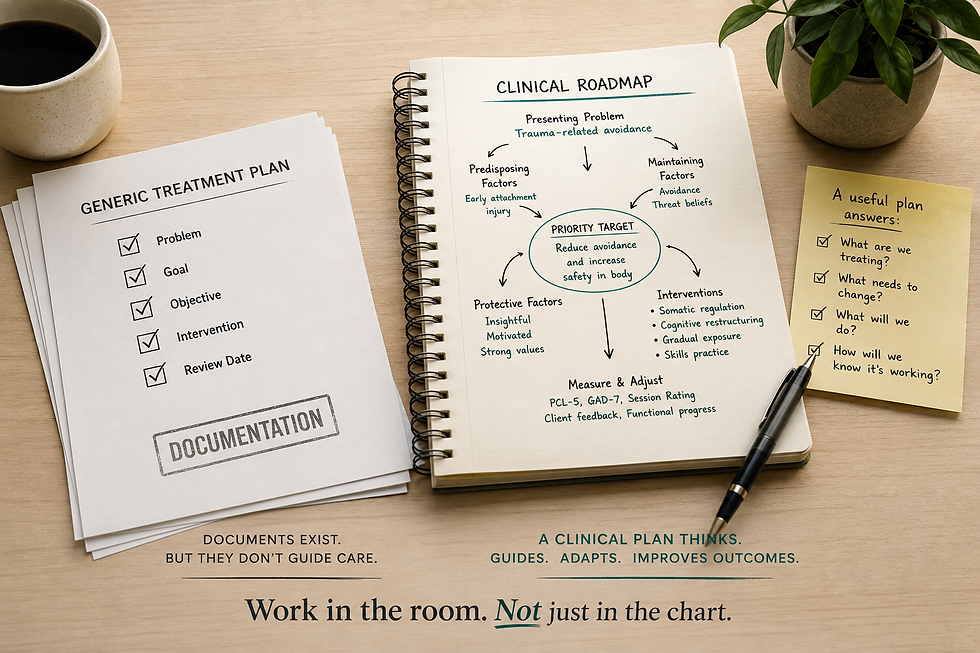
Administering an assessment is data collection. Measurement-based care requires another step: using the information to guide care. The GAD-7 can tell us something important. Clinical reasoning determines what we do with it. Scoring an assessment is the beginning of the clinical question, not the answer.
Explore next: Untangled Mind™ Assessment Engine — turning assessment scores into structured clinical decision support.


Comments